Most smart home products are designed in places where the mains supply is boring. It is there, it is stable, and it stays within a few percent of nominal voltage all year. Build to that assumption in Abuja or Lagos and the system will not fail dramatically on day one. It will fail slowly, in ways that look like bad products but are actually bad design.
We have spent fourteen years commissioning automation in buildings that run on a mix of grid supply, generators and inverters. The pattern is consistent. The components that fail early are almost never the ones the client worried about. They are the small, cheap, always-on parts that nobody protected because nobody thought about them.
This article is about what actually needs protecting, what should keep running during an outage, and the decisions that are cheap at design stage and expensive afterwards.
The three things that damage equipment
It helps to separate the problem. "Bad power" is not one fault, it is three, and they call for different responses.
1. Interruption
The supply stops. This is the one everyone plans for, and by itself it is the least damaging. A device that loses power cleanly and comes back up is usually fine. The damage from interruption is mostly about what the system does on return, which we come back to below.
2. Transients and surges
Short, high-energy spikes. In our experience these do the most cumulative harm, and the most common source is not lightning. It is changeover. Every time supply switches between grid, generator and inverter, connected equipment sees a disturbance. In a house that changes over several times a day, that is thousands of events a year.
3. Sustained voltage deviation
Supply that sits well above or below nominal for minutes or hours. Brownouts strain motors and power supplies. Overvoltage is worse and quietly cooks electronics. Switch-mode supplies in controllers and network gear tolerate a surprising amount, right up until they do not.
Why this matters for automation specifically
- Automation equipment is always on. A TV is exposed to changeover events only when in use. A bus power supply is exposed to every single one.
- It is distributed. Failures are in ceilings, risers and distribution boards, not on a shelf you can swap.
- It is load-bearing for the building. When a gateway dies, the client does not lose a gadget, they lose their lights.
What deserves protection, in order
Budget is finite, so sequence matters. If we could only protect a few things, this is the order we would do it in.
First, the distribution board. A properly specified and, critically, properly earthed surge protection device at the DB protects everything downstream. This is the single highest-value intervention and it is often skipped or installed without a real earth, which makes it decorative.
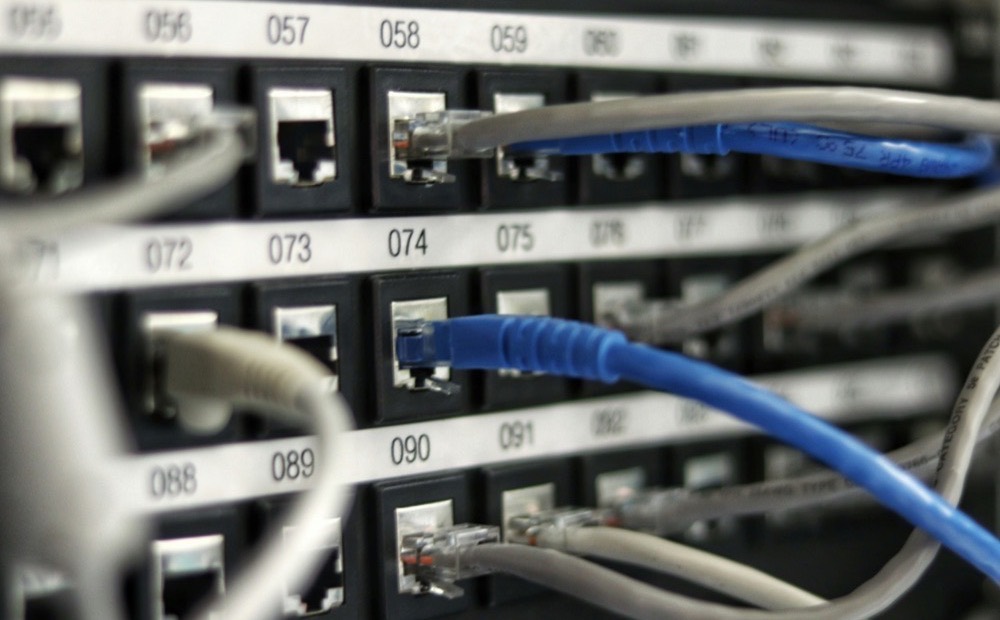
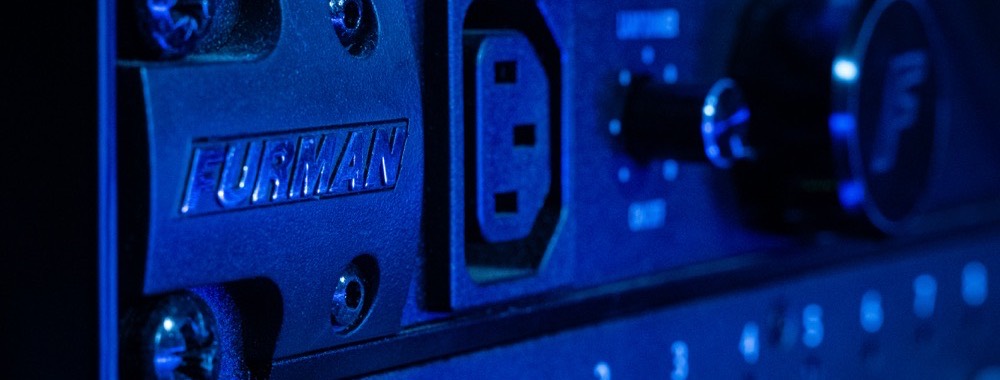
Second, the head-end. The bus power supply, controllers, network switch, router and NVR. These are small loads. Keeping them on a conditioned, battery-backed supply is inexpensive relative to what they control, and it is what allows the system to ride through an outage rather than reboot.
Third, sensitive endpoints. Projectors, AV processors and amplifiers. Expensive, sensitive, and typically on long unprotected runs.
Notice that lighting circuits themselves are not high on the list. The relays and dimmers switching those loads are more robust than the low-voltage brains telling them what to do. Protect the brains first.
A useful rule: the cheaper and smaller the device, the more likely it is to be the single point of failure, and the less likely anyone protected it.
Earthing is the part people skip
Surge protection works by diverting energy to earth. If the earth is poor, the device has nowhere to send that energy and will not do its job, regardless of what the label claims.
We regularly find installations where SPDs were fitted and earth resistance was never measured. The client believes they are protected. They are not. If you take one practical thing from this article, make it this: ask whoever is doing your electrical work to measure and document earth resistance, and treat that number as part of the handover.
Design for graceful degradation
Protection reduces damage. It does not eliminate outages. So the second half of the job is deciding how the system behaves when power goes away and comes back.
State on restore
When power returns, what should the house do? Every light on at full brightness is the wrong answer, particularly at 3am. Good systems let you define restore behaviour per circuit: return to previous state, force off, or force a specific scene. Getting this wrong is one of the most common complaints we hear about systems installed by others, and it is purely a configuration decision.
Local control must survive
This is where architecture matters more than components. If your lighting depends on a cloud service, an internet connection and a Wi-Fi access point, then any one of those failing means the switch on the wall stops working. That is unacceptable in a house.
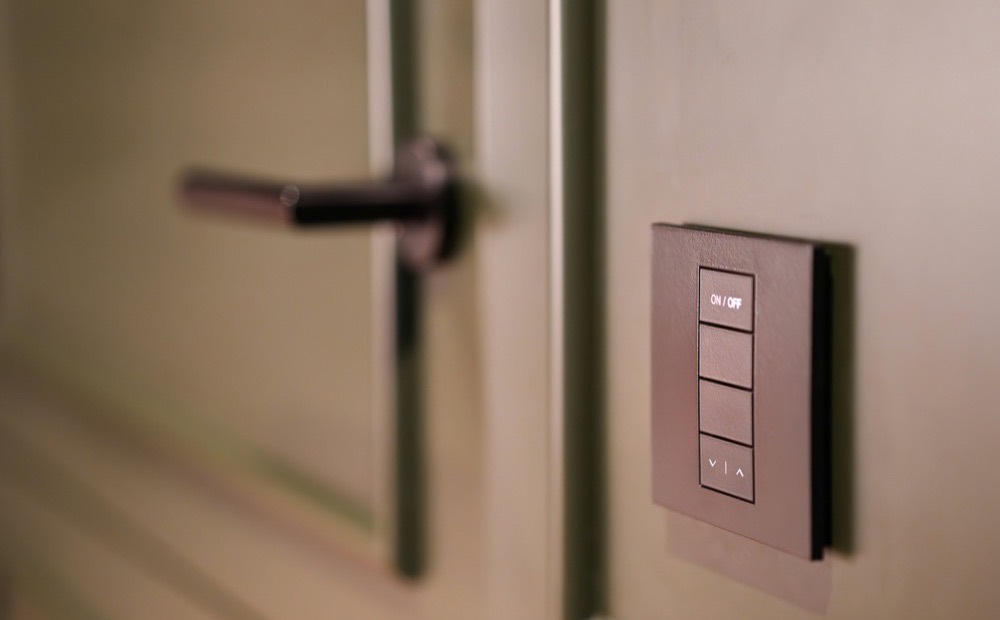
A wired bus system behaves differently. Keypads talk to dimmers over the bus directly. The app and the internet are conveniences layered on top, not dependencies. Lose the router entirely and the lights still work from the wall. We wrote more about that distinction in wired or wireless.
Do not automate what you cannot override
Every automated function should have a manual path. Motorised curtains need a way to move them when the controller is down. Electric locks need a mechanical key. Gates need a manual release. This sounds obvious and is skipped constantly.
A short checklist for your project
- Is there an SPD at the distribution board, and has earth resistance been measured and recorded?
- Are the controllers, bus supply, switch and NVR on battery-backed, conditioned power?
- Has restore-on-power behaviour been defined per circuit, not left at default?
- Does wall control still work with the internet disconnected? Ask for a demonstration.
- Does every motorised or locked element have a manual override?
- Is the changeover between grid, generator and inverter clean, or is it dumping transients into the building?
The honest summary
None of this is exotic. It is ordinary engineering discipline applied to an environment that punishes the lack of it. The reason it gets skipped is that none of it is visible in a showroom demonstration, and none of it makes the sales conversation more exciting.
It is, however, most of the difference between a system that is still working quietly in year five and one that has become a recurring maintenance bill. That is the reason we back our installations with a five year warranty: it only makes commercial sense if the design holds up, which forces the design to be right.
If you are planning a build or a retrofit and want to talk through the power side specifically, that is a conversation we are happy to have before anyone quotes you for equipment.