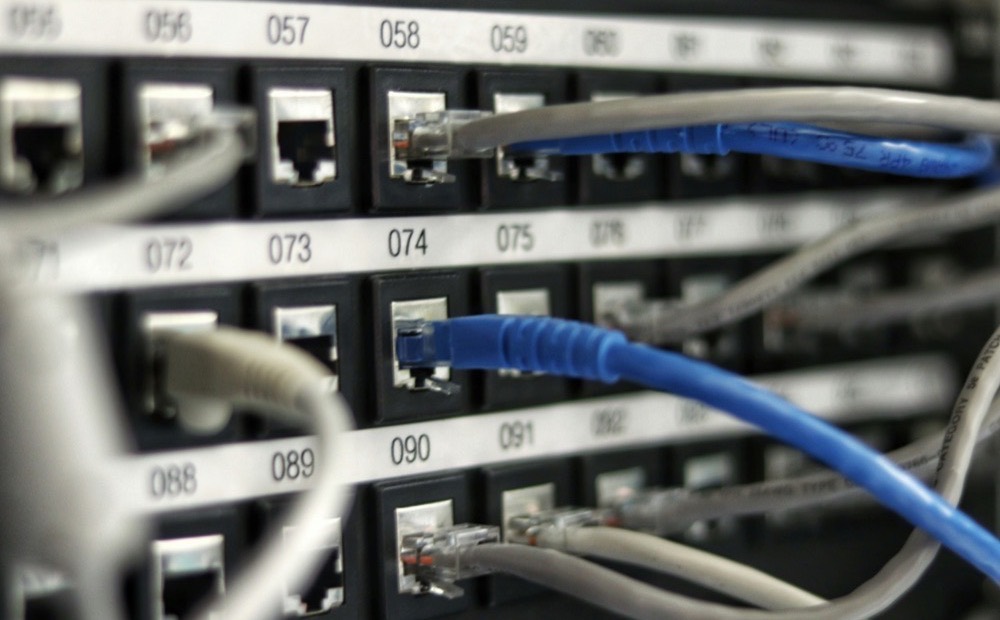
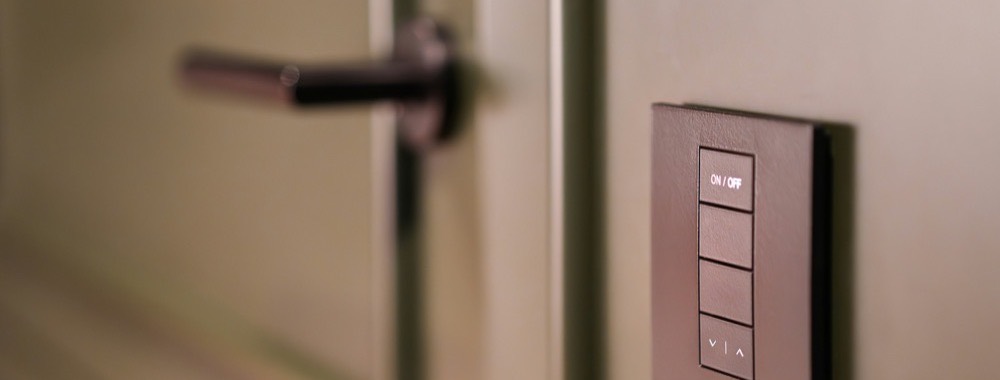
This is the one decision on an automation project that is genuinely hard to reverse. Almost everything else can be changed later: devices swapped, scenes reprogrammed, apps replaced. Cabling cannot, at least not without opening walls you have already paid to close.
The honest answer is that neither approach wins outright. What follows is how we actually decide, and what each choice costs you in practice.
What a wired system gives you
In a wired bus system such as HDL Buspro or KNX, devices share a dedicated cable that carries both power and data. Keypads, dimmers, sensors and controllers all sit on that bus and talk to each other directly.
The practical consequences:
- It does not depend on radio. No congestion, no interference from neighbouring networks, no dead spots behind a concrete core or through a block wall.
- It does not depend on the internet. Press a keypad and the dimmer responds over the bus. The router can be unplugged and the house still works.
- Response is consistent. A wired command behaves the same at 2pm and at 2am, with no mesh to rejoin.
- Very little to maintain. No batteries to replace across dozens of devices.
The cost is that it has to be planned early and installed during first fix. If the cable is not in the wall, the option is gone.
What a wireless system gives you
Wireless is the sensible answer for buildings that already exist. It earns its place honestly:
- No structural work. Retrofit into a finished home without chasing walls or lifting finishes.
- Lower entry cost. You can start with one room and extend.
- Easy to move. Useful in rentals or spaces that get reconfigured.
What you accept in return is a dependency on the radio environment and, in most product ecosystems, on a manufacturer's cloud service. Batteries need managing. Firmware updates occasionally change behaviour you were relying on. Range through Nigerian construction, which tends towards dense block and concrete, is usually worse than the datasheet suggests.
The question that settles it
- Are the walls still open, or about to be? Wire it. The marginal cost during first fix is small and the option disappears permanently once plastering starts.
- Is the building finished and lived in? Wireless, unless you are already renovating that area.
- Is it a commercial or multi-unit building? Wired, nearly always. Scale and uptime requirements make the reliability difference decisive.
Hybrid is normal, not a compromise
Most of what we install is a mix, and that is a deliberate choice rather than a fallback.
A sensible pattern: wire the things that are structural and long-lived, which means lighting, curtains, HVAC control and anything in a distribution board. Use wireless for the things that are additive and may change, such as a sensor in a room nobody planned for, a smart lock, or a camera on an outbuilding.
What matters is that the wired layer is the one carrying the functions people would miss most. Nobody minds if a wireless sensor drops offline for an hour. Everybody minds if the lights do.
Put it this way: run cable to everything you would be annoyed to lose. Use radio for the rest.
A note on cost
Wired systems look more expensive because most of the cost is visible at the start, in cable, containment and labour during first fix. Wireless spreads its cost out, which makes it feel cheaper.
Over a ten year horizon, the comparison narrows considerably once you count battery replacement across dozens of devices, the callouts when a mesh becomes unreliable, and the retrofit work if you eventually decide you wanted wired after all. We are not going to claim wired always wins on cost, because for a finished apartment it clearly does not. But the first-glance price gap is misleading.
If you are building right now
The single most useful thing you can do, even if you have not chosen a system or a contractor, is run the cable anyway. Bus cable and a few spare CAT6 runs to key locations cost very little at first fix and cost enormously later.
Pulling cable you may not use is cheap insurance. Not having it is the most common regret we encounter on retrofit visits.
If you want to talk through what to run before your electrician closes up, that is a short conversation and we are happy to have it whether or not you end up working with us.